Four summits in. Every score higher than the last.
Entrepreneur First's annual Global Summit moved to a bigger stage in Athens — the fourth we've delivered together, and, by every measure that matters, the best-rated yet.
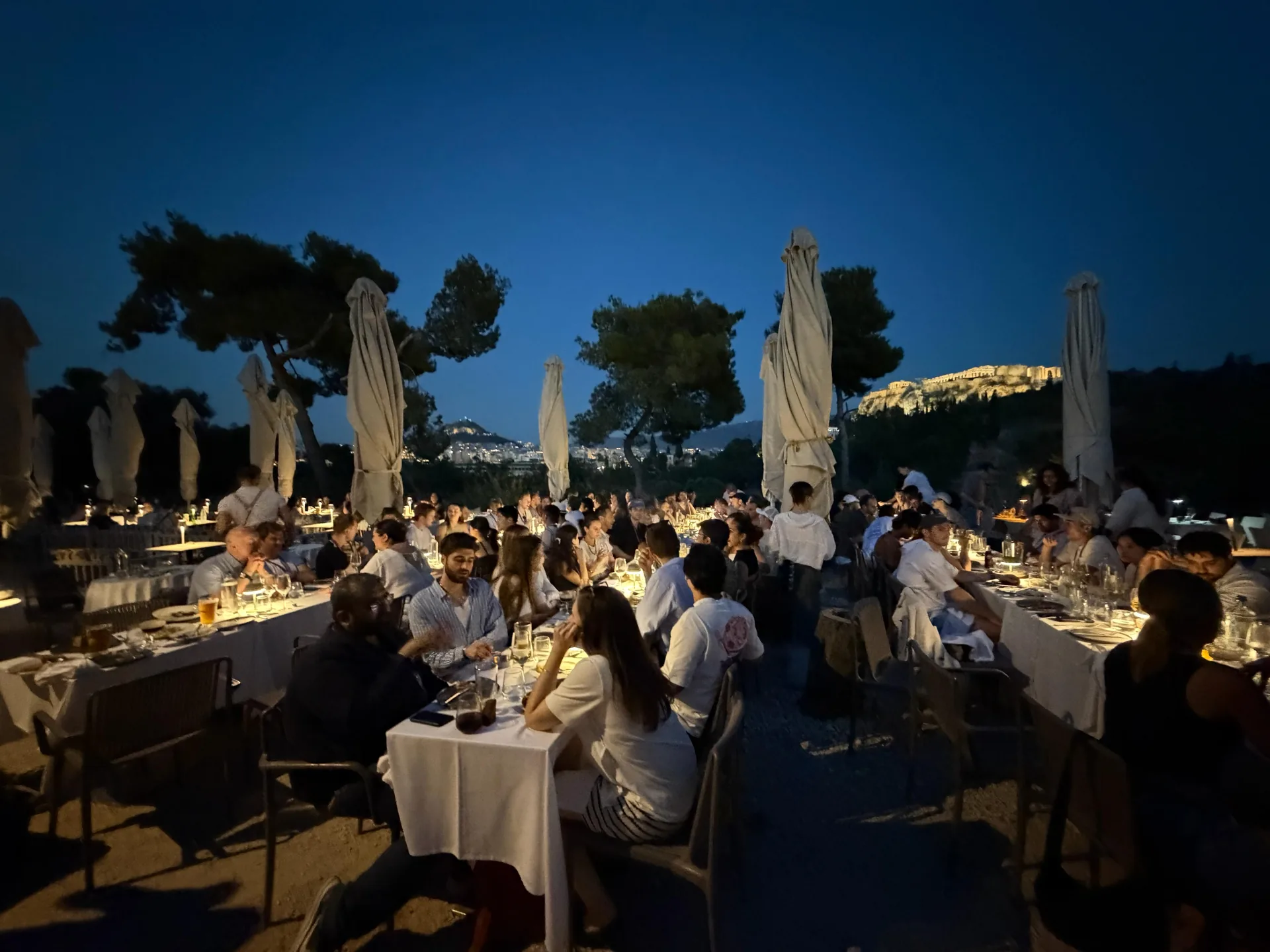
A summit built for better work — not a break from it.
Entrepreneur First is fully remote. Its annual Global Summit isn't designed as a pause in the work. It's designed to make the work better.
This was the fourth event we've delivered together, and each year has carried a slightly different challenge. The team changes significantly from one year to the next — around 50 of this year's attendees were new to the organisation since the last summit.
So the event has to do two things at once: build meaningful connections quickly, and create space for serious working sessions — not fluffy ice-breakers. For Athens, the brief scaled up. A higher investment in venue and experience, and one clear expectation: a setting that could hold full working days, intense collaboration, and stronger relationships across a distributed team.
A bigger investment that paid off
The most obvious shift in Athens was the venue. EF invested more this year — and the return on the ground was undeniable.
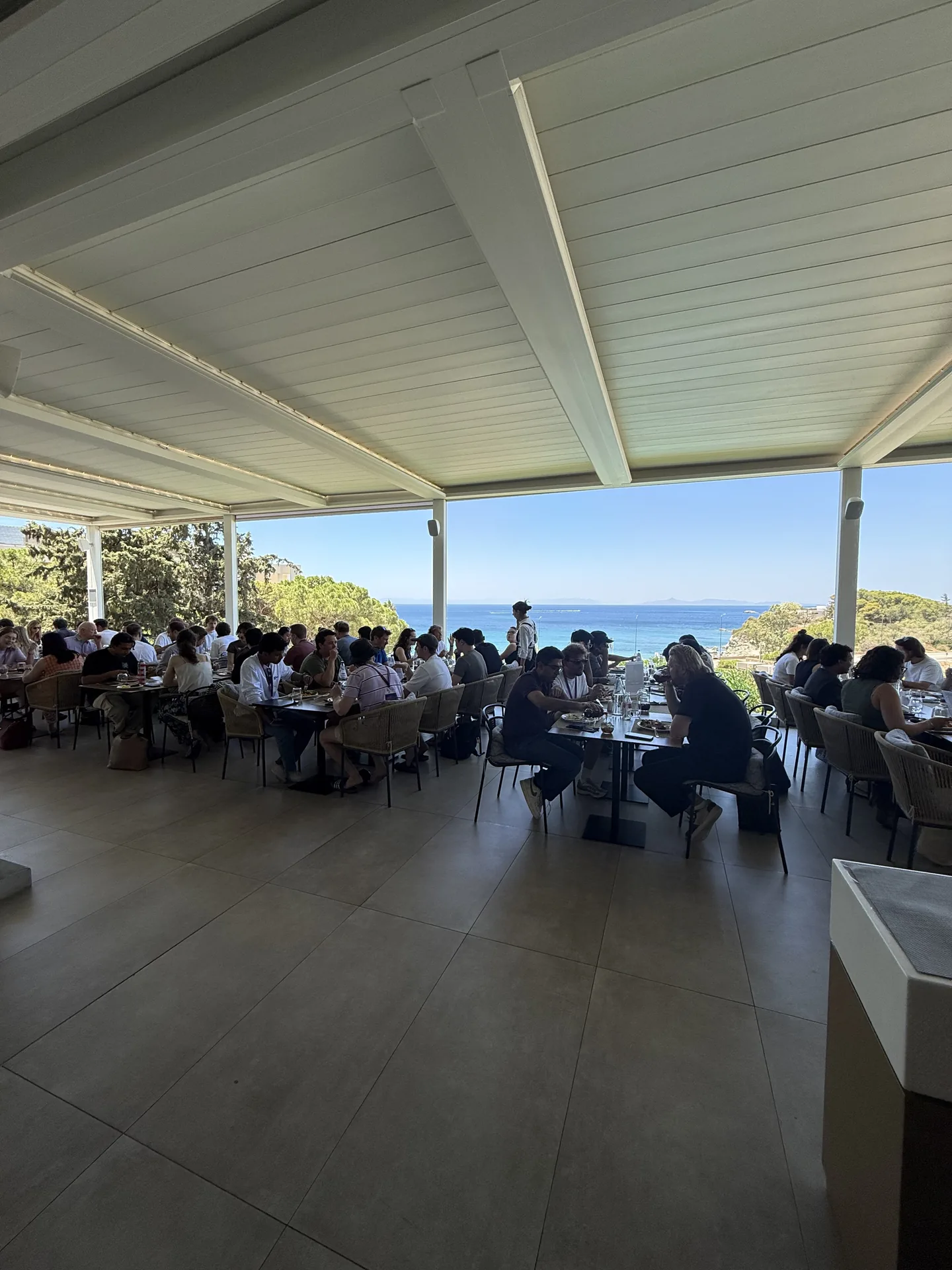
The hotel sat close to the beach, with strong sea views, a newly renovated beach bar, and a conference centre built to handle full working days. Some sessions and meals sat in a separate building from parts of the accommodation, which meant short walks between them. In practice, that became a useful reset point rather than a disruption.
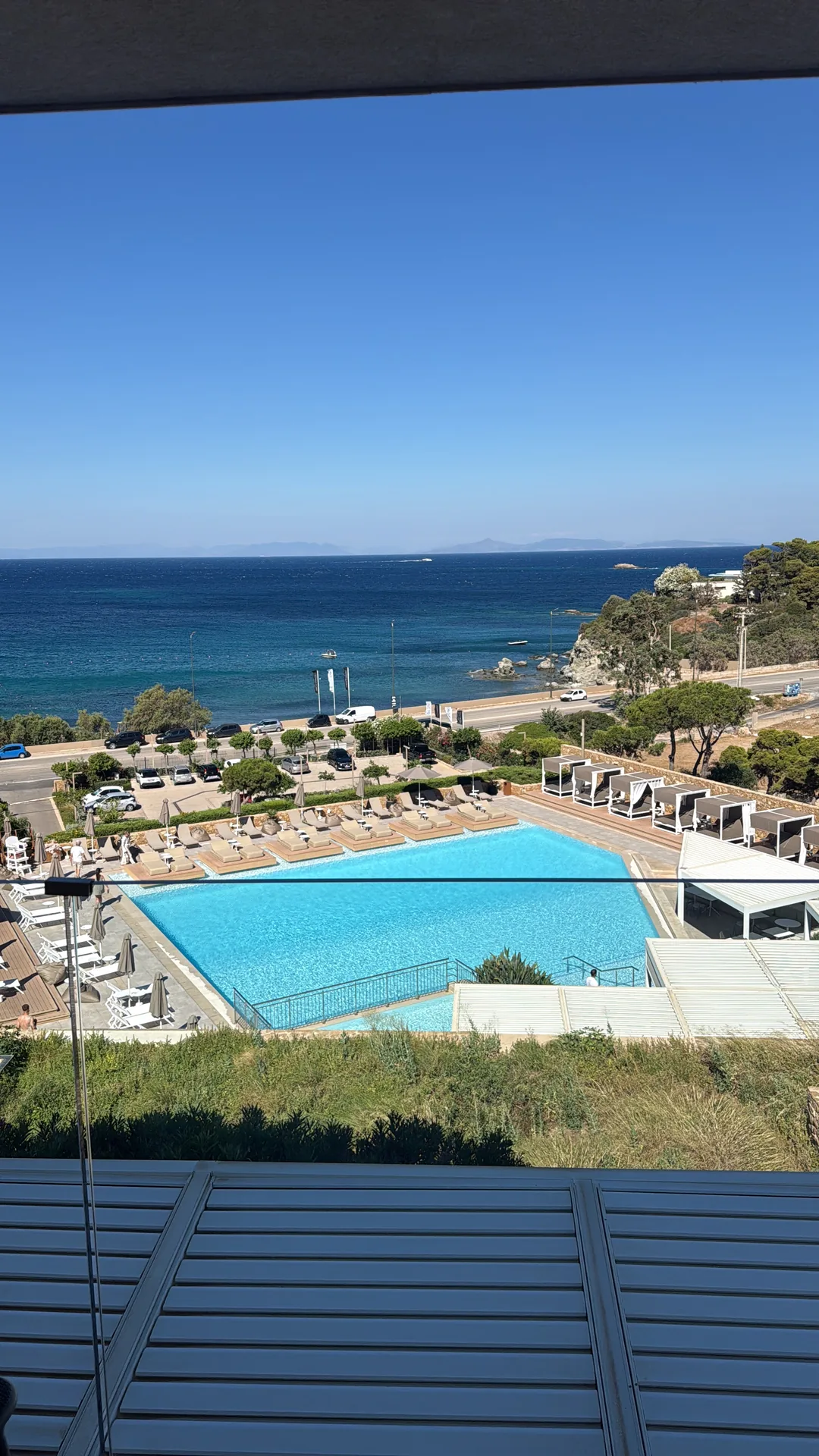
The scores backed the decision.
Feedback on the venue reached its highest levels in three years — and the operational scores that had lagged in previous years climbed sharply.
The pattern is the point: offsites are investments, not expenses — and partnerships get stronger as client and provider get to know each other's standards.
A new venue, held to a standard it had never been measured against
By the time the summit began, the attendee experience ran clean. The work was in the months before it.
The city was familiar to us; the venue was new. That meant holding a property we hadn't run before to standards it had never been tested against — and most of that happened in the weeks leading up to the event. The hotel had a fixed idea of how its space worked. Getting the exact layout the summit needed took weeks of negotiation. We got it.
These are the details that either surface in front of attendees or disappear entirely. In Athens, they disappeared — because we'd done the groundwork.
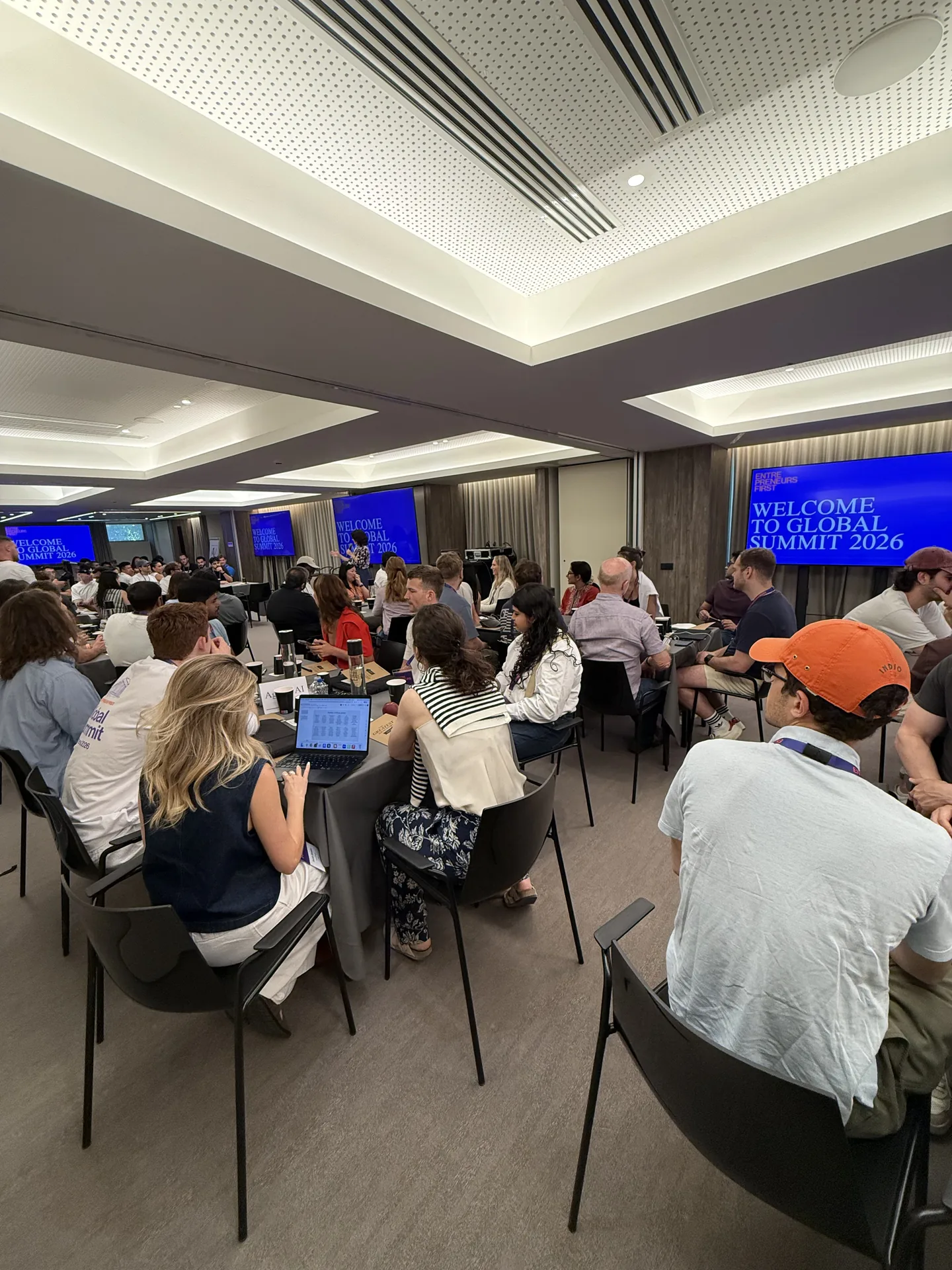
A serious summit, in a setting people didn't want to leave.
One question stayed open longer than any other
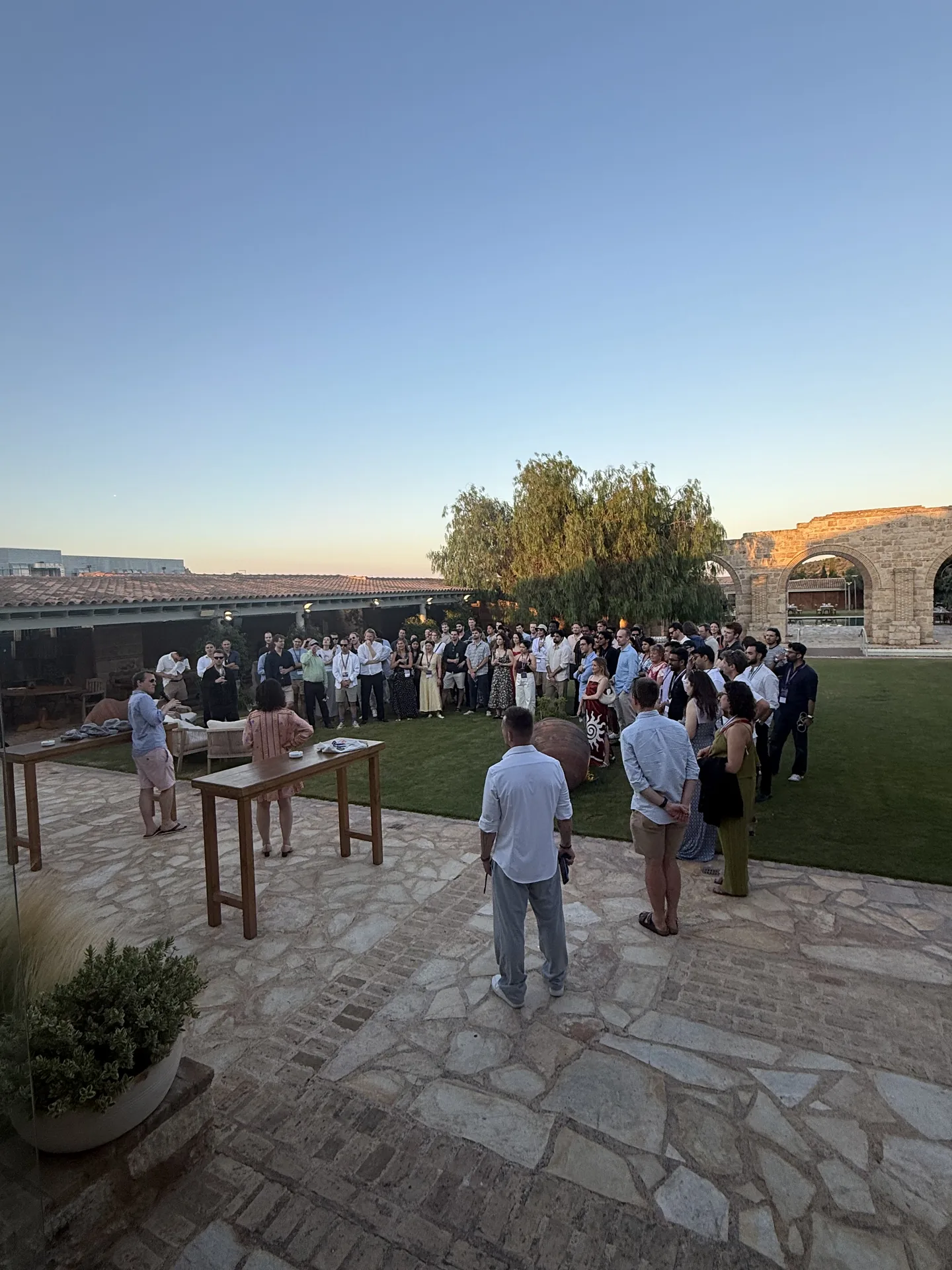
The hotel's beach bar was mid-renovation, and nobody could tell us whether it would be finished in time — or whether it could hold the full group privately. So we built the welcome event twice: one version that used the space, one that didn't, and kept both live until we had a firm answer.
It was finished. The group arrived to welcome drinks and finger food in a private beachside space with open views, then dinner upstairs, then back down to the beach for a game built around ancient Greece — guests in white and gold, temporary tattoos handed out on arrival. In the post-event feedback, the welcome night came up more than any other moment of the summit.


A summit that never really switched off
One thing we love about EF is how seriously they treat time together. This wasn't a retreat built around long afternoons by the pool. The days were full — brainstorming, collaboration, working sessions — and the beach and the pool were only ever fleeting distractions.
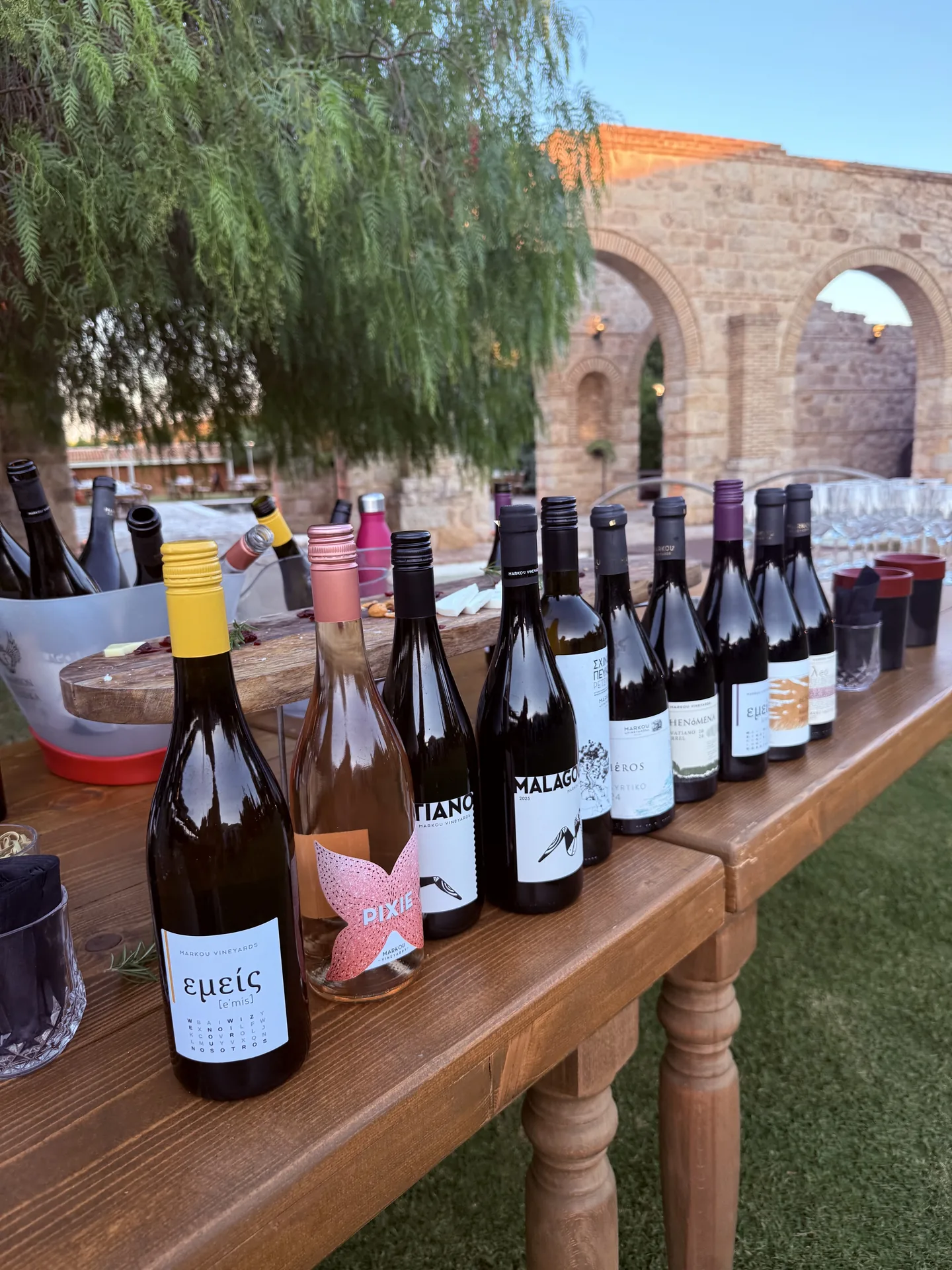
Take the closing dinner: a wine tasting and a seated meal. And yet our friends at EF were still deep in discussion. At one point the background music was stopped so the moderated conversations could carry on properly. The dinner wasn't a break from the summit — it was just a different scene for it. Entrepreneur First's culture, in action.


The strongest part of the Athens story is the feedback.
97% agreed the Global Summit was a high-impact, valuable event — worth the time and the financial investment to plan, deliver, and attend.
The words attendees reached for most? "Awesome." "Connection." "Fun." And from new joiners: it got them up to speed, introduced them to the team, and gave them the context the agenda was built to deliver.
The connections weren't left to chance
One of the strongest results was relationship-building: 95% said they built stronger relationships with the people they intended to connect with. That didn't happen by accident.
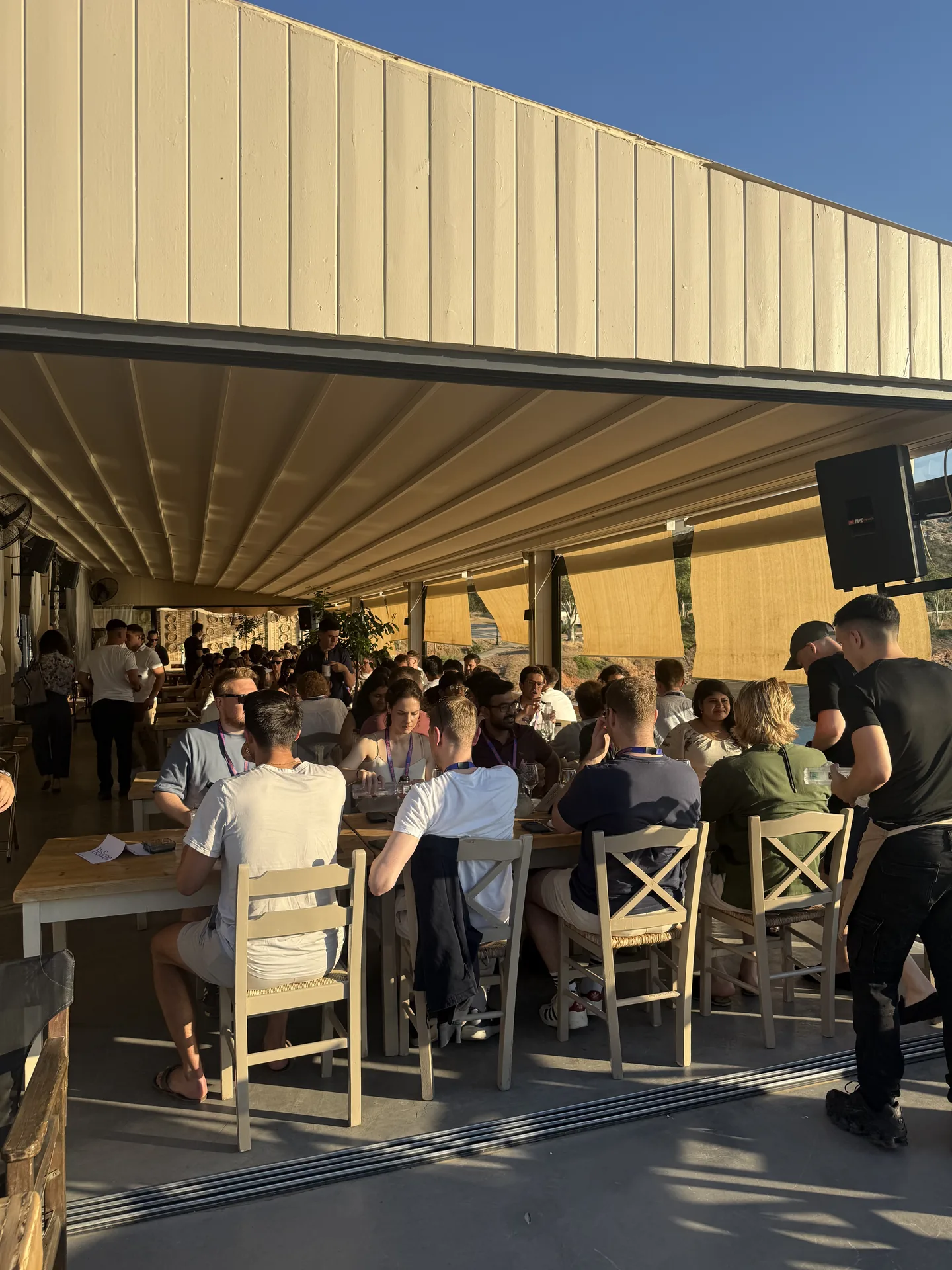
It came from deliberately mixing people across teams and locations — a structured AI Hackathon, moderated dinners, and evening activities designed to pull people beyond their immediate teams. For a remote organisation with this many new faces, it's offsite-ing at its very best.
Turning a high-investment brief into a smoother operational reality
For OnsiteHub, Athens was about exactly that: holding a new property to our standards during planning, building the opening night twice so either outcome worked, making the meeting rooms function for 96 people, and keeping AV, Wi-Fi, catering and transfers running across a demanding agenda.
It also meant understanding the culture — a young, humble, highly focused group whose brief, at its core, was simple: make every in-person moment matter.
Four years in, that understanding is the part that compounds. We know how this team works, where the agenda strains, which details they care about and which they don't. Each summit starts further along than the last.
Four summits. And a baseline that keeps moving up
The Athens summit didn't succeed because it felt like a holiday. It succeeded because it delivered measurable outcomes for a remote organisation that treats in-person time as a serious investment.
That last one is what we care about most. Across four summits the ratings have climbed every year — not because any single year was transformative, but because nothing has to be relearned. The lessons carry forward, the standard moves up, and the baseline for the next one is set higher than the last.
Planning a summit your team rates higher every year?
Whether it's 40 people or 400, the principle holds: the best summits are built, not booked — designed around what actually matters to your team, then delivered so the details disappear. That's where we start.
Get a Proposal