Update Date:
August 6, 2026
Common sense assumption: you’re better off just planning your company offsite in the UK.
The surprising reality: European retreats for UK companies are cheaper, logistically a breeze, and offer better seasonality.
But post-remote work, post-Brexit, post-budget squeeze… that default is starting to look expensive, weather-dependent, and oddly limited compared to what’s just a couple of hours away in Europe.
This isn’t about abandoning the UK. It’s about widening the map. Here’s why more UK teams are looking at Europe (and how to do it properly).
Team off-sites used to be treated like perks. Holidays on the company account. Now they’re infrastructure. Strategic investments that will bring returns on your team's performance.
In a remote world, we’re now talking to each other more than ever in meetings and meetings about how many meetings we’re having to overcome the lack of physical proximity.
Research from Gallup consistently shows that engaged teams outperform disengaged teams by 18% in productivity and 23% in profitability. In practice, leadership teams are using off-sites as one of the few environments where engagement sticks longer than a New Year's gym streak.
But here’s the catch. Only if they’re done right. These events very easily become stressful, overpriced, and cynical.
You can get on the right track from the start by looking to Europe.

For UK-based teams, Europe has three structural advantages that are hard to ignore:
From London:
Meanwhile, it will take 7 hours to drive to the Scottish Highlands.
In practical terms, many European hubs are closer than flying to the Highlands once you factor in rail, transfers, and remote locations.
This changes the entire psychology of planning. Instead of “big expedition,” it becomes “extended working day plus a flight”.
Then as now, you still need a passport to go to Europe. In the context of travelling, Brexit hasn’t really changed anything, has it?
UK passport holders can still travel visa-free across the Schengen Area for up to 90 days in any 180-day period for tourism and most business activities, including meetings, conferences, and retreats.
So nothing has changed vis-à-vis off-sites. For most companies, retreats fall well within standard travel allowances—no sponsorships, no visa bureaucracy, no friction.
There was a time when ‘going abroad’ was for the well-to-do. A holiday was a day-trip to the coast. This UK doesn’t exist anymore.
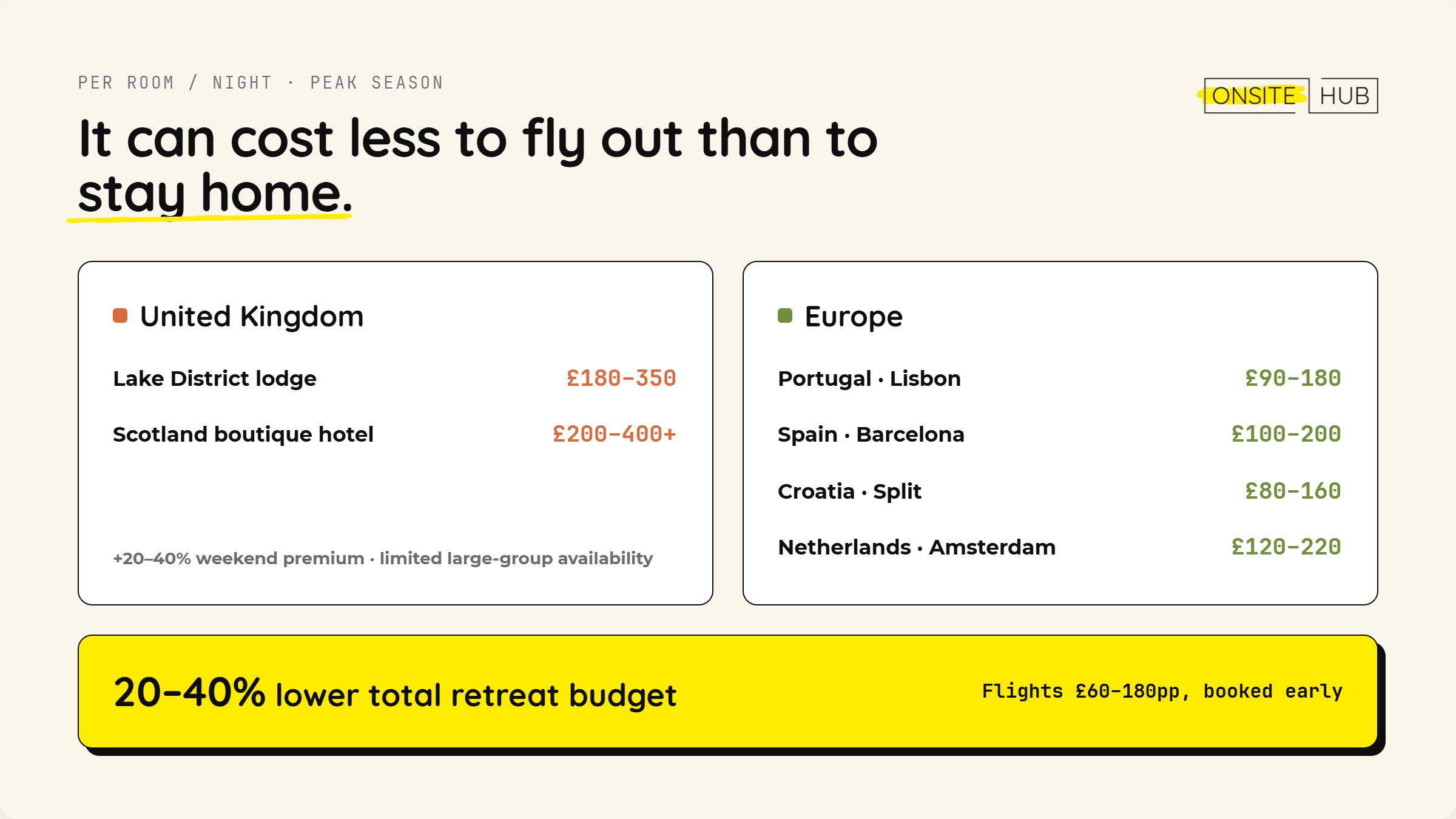
The bottom line is it’s cheaper to travel to Europe than it is to go on a staycation in the UK.
Let’s talk numbers.
A typical UK retreat in peak season:
Now compare that with Europe:
Even before flights, the total retreat budget is often 20–40% lower in Europe for equivalent or better venues.
And flights? With competitive European routes, return tickets from the UK frequently range between £60 and £180 per person when booked early.
And anyone who has travelled around the UK knows that train fares can be eye-wateringly expensive.
The result: you’re often paying less for more space, better weather, and stronger infrastructure.
Let’s strip away sentiment and look at reality.
The takeaway is simple:
UK retreats are easier. European retreats are higher leverage.

Across UK-based teams planning off-sites, we’re seeing consistent destination clusters:
A favourite for leadership teams and tech companies.
Why it works:
Example:
We’ve seen product and leadership teams use Lisbon for “reset retreats”—structured mornings, coastal afternoons, and strategic planning sessions in hybrid indoor/outdoor spaces.
Best for teams that want energy + structure.
Why it works:
Barcelona, in particular, has become a “safe bet” for companies wanting urban + beach hybrid formats.

Best for UK companies wanting minimal culture shock.
Why it works:
Downside: costs can approach UK premium pricing in peak season.
Best for immersive, high-impact retreats.
Why it works:
Example:
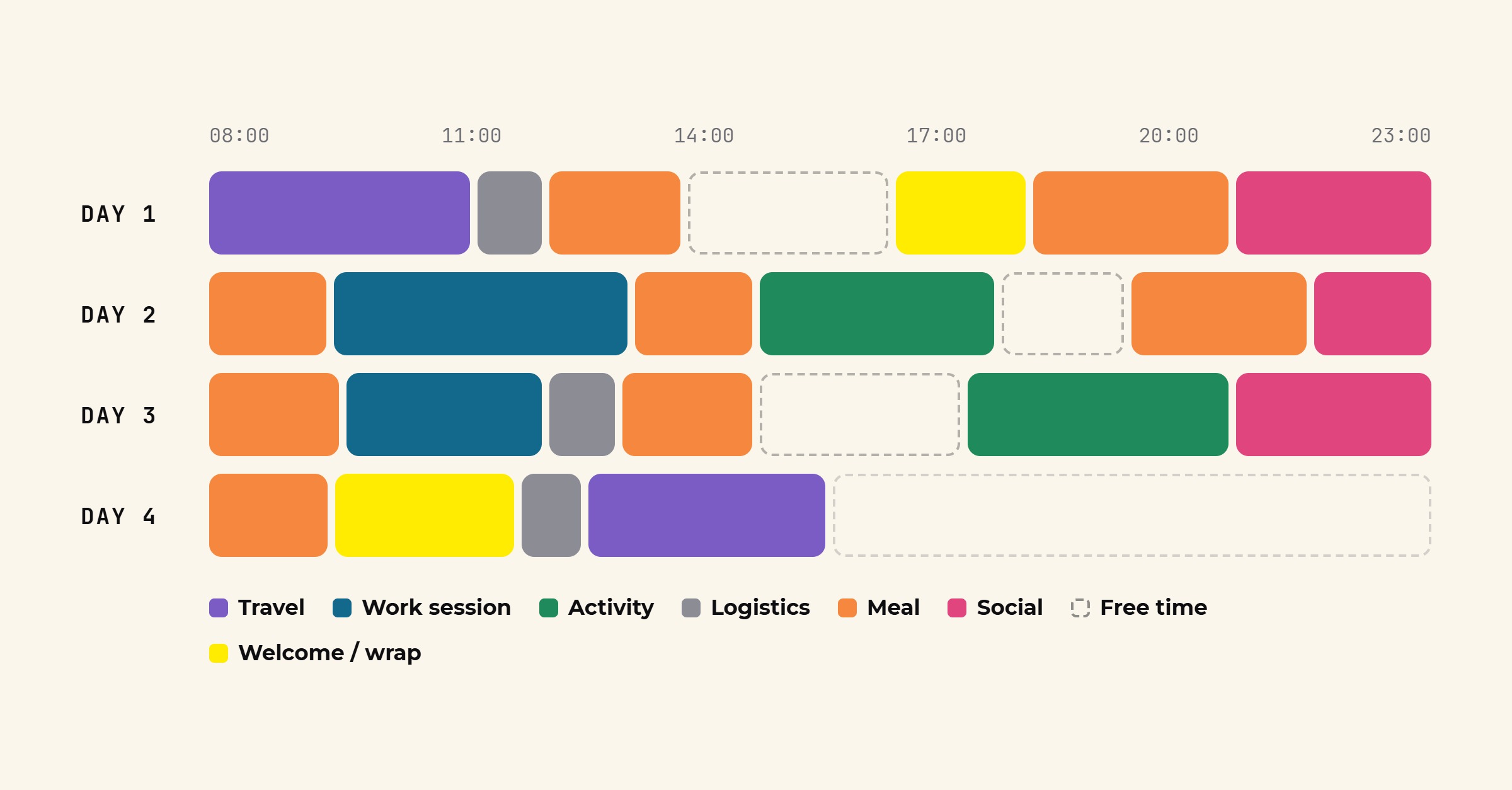
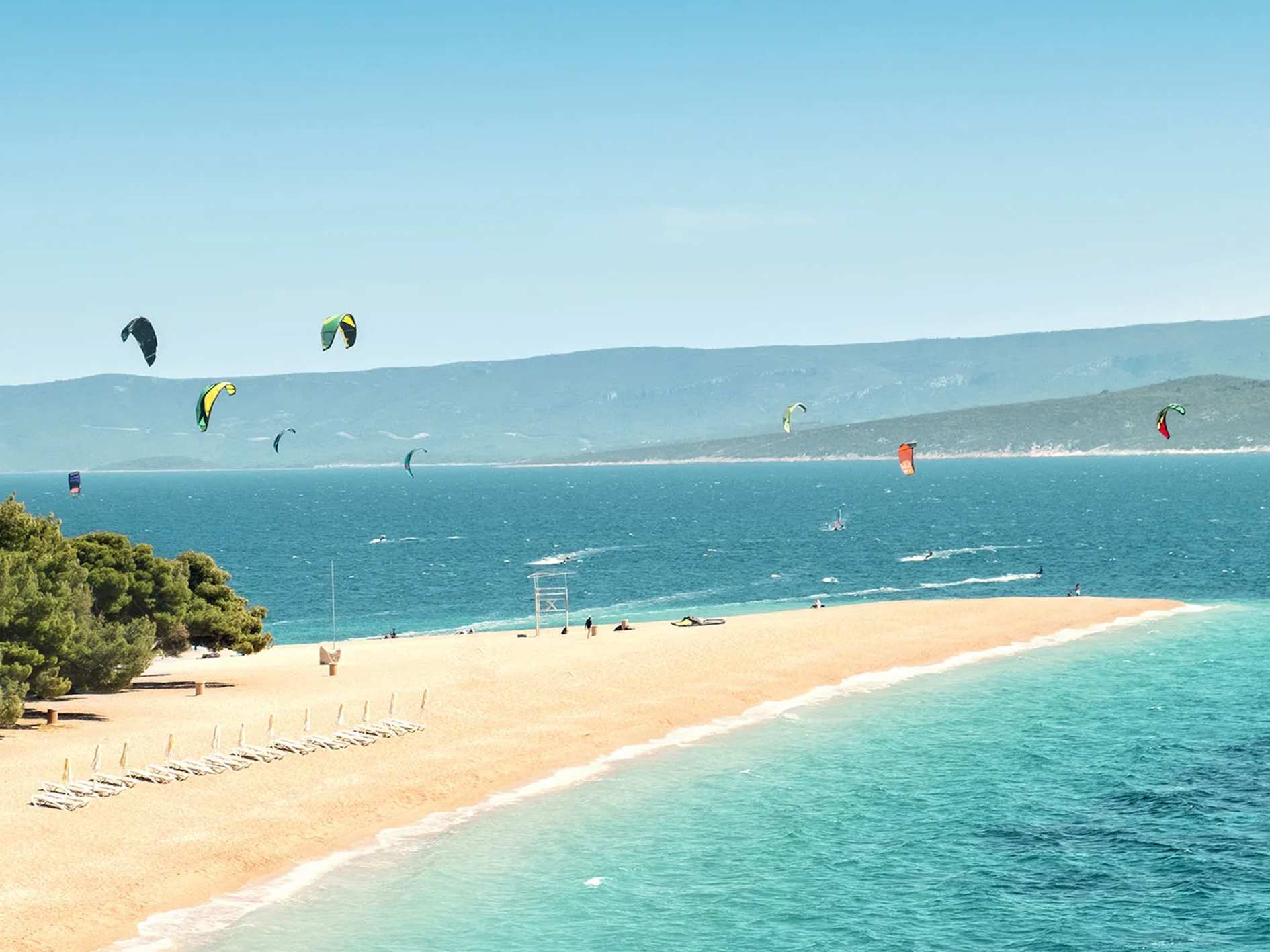
Win.app’s retreat format in Croatia demonstrated how structured downtime can drive team alignment when paired with intentional facilitation in beautiful coastal venues. View the company retreat case study here.

Let’s be clear: Brexit didn’t kill European retreats. It just removed the illusion of “borderless Europe”.
For UK companies, what matters now is:
For most companies, this is handled easily with basic travel planning, not legal complexity.
Official guidance: UK Government Travel to EU Rules
There are times when a UK offsite can be the silver bullet you need. And figuring it out is rather easy. All you need to do is run your specific situation through it - seconds later, you’ve found the truth.
Stop thinking in terms of “where is nicer”. That’s a different conversation for a different time. Start thinking in terms of objectives.
The weather in the United Kingdom is more of a punchline than something that is yearned for. And even though the bleakness of the weather in the UK can be exaggerated… It’s not brilliant. At all.
Retreats in the UK are seasonal. You’re only likely to go there from April to October. And even then, always, ALWAYS, bring a raincoat.
Europe, however, has multiple climate-safe zones year-round. Even in the dead of winter, there are treasures in Europe.
If you’re spending £1,200–£2,500 per person in the UK for a 3-day retreat, Europe can often deliver:
They compare Europe vs. the UK as destinations.
That’s the wrong comparison.
The real comparison is:
“What level of team outcome do we get per pound spent?”
And on that metric, Europe often wins—not because it’s “better”, but because it’s more optimised for structured off-sites.
There are plenty of moments when the UK is exactly the right call:
The UK earns its place. It's simply one strong option among several now, rather than the automatic default.
This is where most companies go wrong.
A good European retreat is not a travel booking exercise. It’s a designed experience.
You need:
Done well, Europe becomes more than a location, it becomes part of the programme design.

For UK companies, the question is no longer:
“Where should we go for our offsite?”
It’s:
“Where will our team actually think, connect, and reset most effectively?”
And increasingly, the answer is a short flight away.
If you’re weighing up UK vs European options, we can help you map both properly, costs, destinations, and formats side by side.
Book a discovery call – we’ll help you compare UK vs European options and design a retreat that actually delivers outcomes, not just photos.

You brief us once. We handle venues, travel, activities and everything in between.