Update Date:
September 24, 2026
There's always one tell-tale sign it's someone's first retreat agenda: there's too much stuff.
The welcome dinner, the strategy session, the team-building activity, the workshop, another team-building activity, the feedback circle, the closing lunch. Every slot filled. You send it to your founder, "does this look okay?" They see a packed schedule and think, great, we're getting our money's worth. "Looks great!"
Here's what neither of you can see yet. We design retreats for a living, and they almost never fail because of bad content. They fail because of structure. We've looked at hundreds of agendas, and the ones that go wrong are rarely the ones with weak sessions. They're the ones where people come home drained, disengaged, and quietly resentful of the time away.
The good news: it's fixable, and it's not about doing less for the sake of it. Here's how to build an agenda people come back from energised, not exhausted.
Most importantly, we’re dropping our Corporate Retreat Agenda Template.
This isn’t a ‘Free Tool’ gimmick. This is the same template our planners have used for 300+ retreats.
Let's start with the hardest truth.
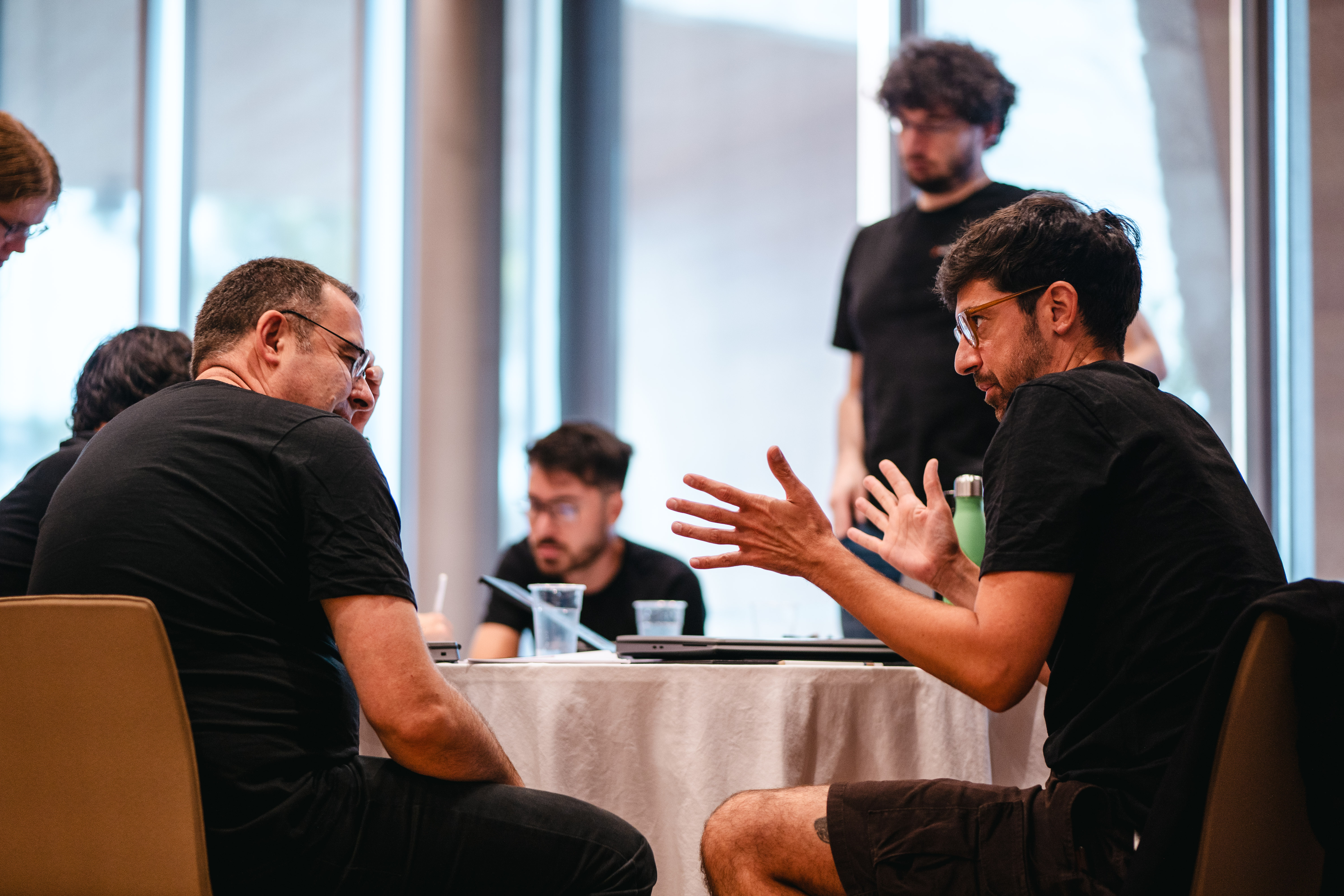
A full agenda became a lazy proxy for a good one. If every hour is scheduled, you must be getting your money's worth, right?
You flew everyone to a nice venue. You paid for the catering. You'd better fill the time. But cramming the day deletes the exact conditions that make a retreat work.
Think about what you're actually trying to achieve. Alignment. Trust. The moment someone realises their colleague is a real person, not just a Slack avatar. A decision that actually sticks because everyone was in the room and actually present for it.
None of those things happen because you scheduled another breakout. They happen in the gaps between the scheduled things. They happen over coffee (or something stronger). On a walk. Ten minutes after a session ends when two people keep talking because they're not done yet.
Fill every gap and you delete all of it. We see the same thing when activities get squeezed into already-tight schedules. Recently, a client wanted to add more into the gaps between sessions and departures. Technically, we could make it fit.
But fitting it in wasn't the same as making it work. People would have been rushing out of one thing to get to another, watching the clock instead of enjoying the moment, then rushing again to make the next departure.
So we simplified it. Less in the schedule. More space in the day. A boat trip with a panoramic tour, an island stop, and free time squeezed into three hours sounds great on paper. In reality, it's transfers, waiting, rushing, and people half-enjoying something that should have been a highlight.
It's the same with food. We're often asked to mix menus, take a bit from here, a bit from there, to create more choice. It sounds thoughtful. But in practice, kitchens don't execute hybrid menus well at scale. Service slows down, quality drops, and the experience becomes a hangry nightmare.
A retreat agenda isn't a puzzle where the goal is to fill every available square. More programming doesn't equal better outcomes. It equals exhausted people performing engagement.
WARNING: Skip this section and you’ll waste two weeks tweaking time blocks. Spend 30 minutes here first.
Don’t draft a single time block until you can answer these in one sentence each.
1. What is the retreat for? Pick one: alignment, celebration, planning, onboarding, or relationship-building. Picking two means picking neither.
2. Who is the audience? Whole company, leadership only, one function, a cohort? This drives venue size and agenda density.
3. What single outcome must exist by the last day? A decision, an artefact, a relationship, a shared experience. If you can’t name it, the agenda will drift.
4. What’s the budget envelope? Per head, all-in, including flights. European budget tiers are roughly: €1,200 (lean, regional), €1,800–€2,500 (standard), €3,500+ (premium).
5. What are the hard constraints? Visa requirements per attendee nationality, accessibility needs, dietary, religious observances, school holidays.
These aren't details to sort out once the agenda is finished. They shape the agenda from the beginning. Once you know those five things, you can start thinking about the shape of the retreat. And this is where most agendas go wrong.
ZOOM OUT: If you're still working out the basics before you start building the schedule, our how to plan your first company retreat guide walks through the bigger decisions, from defining the purpose to choosing the right destination and venue.
The structure of a good retreat is a bit like the structure of a good film.
Beginning.
Middle.
End.
Unless it's a film that's going out of its way to confuse you, but we're not in the confusion business.
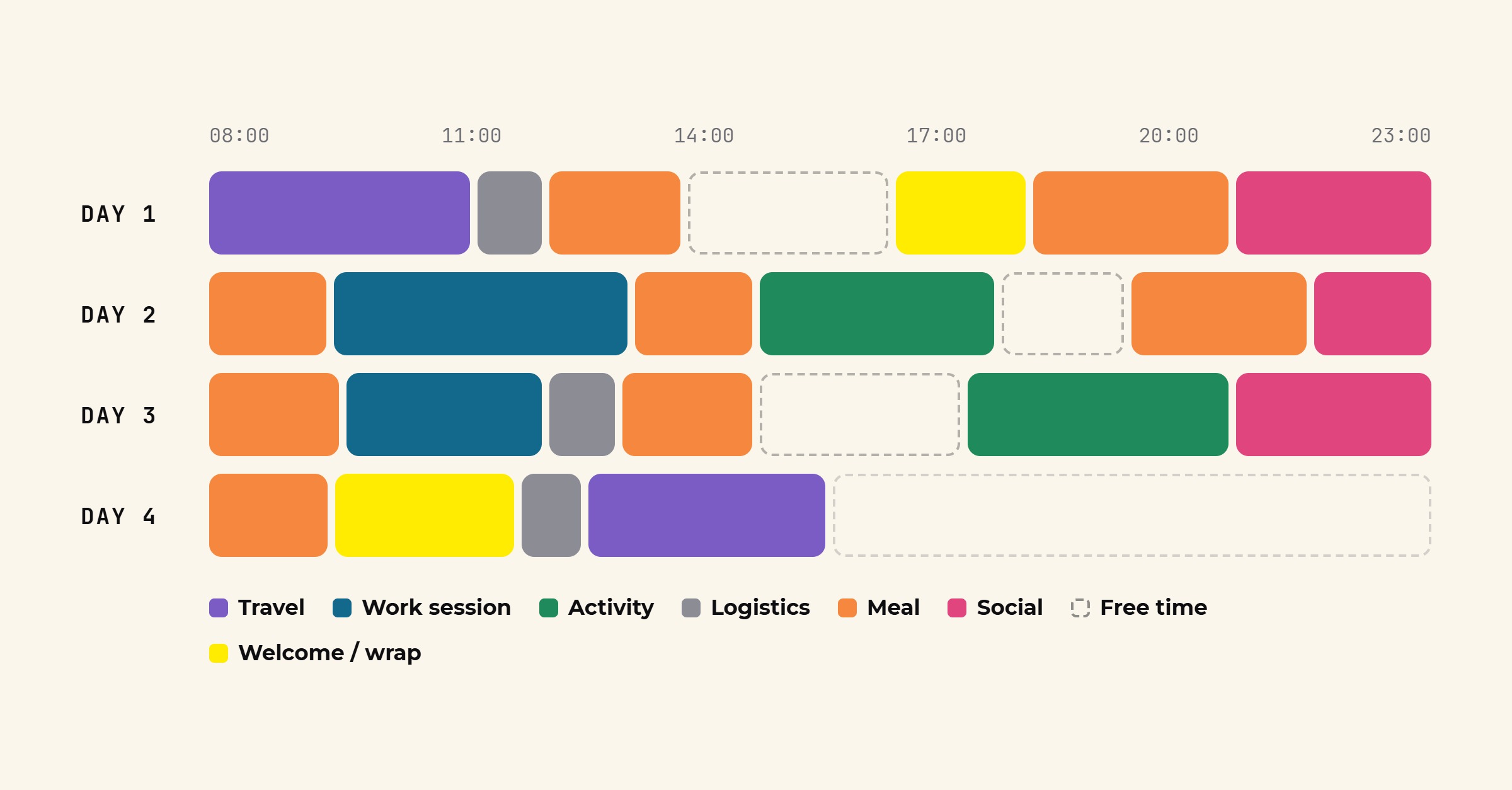
Anyway, the plot of your retreat needs a logical shape too:
Roughly:
This isn't a law, of course. But it’s a guide crafted via over 300 retreats.
Even the smoothest travel day will leave a person a bit tired. Add the many things that can and do go wrong, and that can make a person more than tired. Grumpy, even.
So, Do. Not. make the first evening another full day of programming.
People have travelled. Some are still checking into their rooms. Some have known everyone for ten years. Others have only met their colleagues through a laptop.
The first evening is about settling in, eating well and getting conversations started.
A welcome dinner? Absolutely. A packed evening of activities? Probably not.
Give people enough structure to bring them together, then get out of the way.

The first morning should still be relatively light.
Orientation. Connection. Something that gets everyone into the same physical and mental space.
This is the time to establish what the retreat is about, what you want to achieve and how you’re going to work together.
If you put your hardest strategic conversation at 9am on day one, you're asking people to do deep, high-stakes work before they've properly arrived.
The quiet people will stay quiet. The loud people will fill the space. And you'll risk leaving with a decision that nobody actually owns.
Start by getting everyone in the room, not by throwing them straight into the deep end.
This is the sweet spot.
The group has warmed up, shared a meal, had a few unstructured conversations and started to feel like a group rather than a collection of individuals.
Energy is high. Trust is forming. People are properly present.
Now is the time to do the hard stuff.
The strategy session. The facilitated workshop. The planning sprint. The conversation that actually needs everyone in the room.
This is where you want to spend your best collective energy.
Our 2-day leadership example in Lisbon follows this principle very directly. The second day's 09:00–11:00 strategy workshop is described in the template as the “Highest-energy slot.”
That's where the agenda puts the decisions.
Not because 9am is magically the best time for strategy.
Because by then, people have arrived, settled in and had a night to reset.
Then, close lighter.
Energy starts to dip. People are tired. Social batteries are draining. Some people are already thinking about flights home.
This is not the time to squeeze in another three-hour workshop because there was a gap in the agenda.
It’s time for a reset.
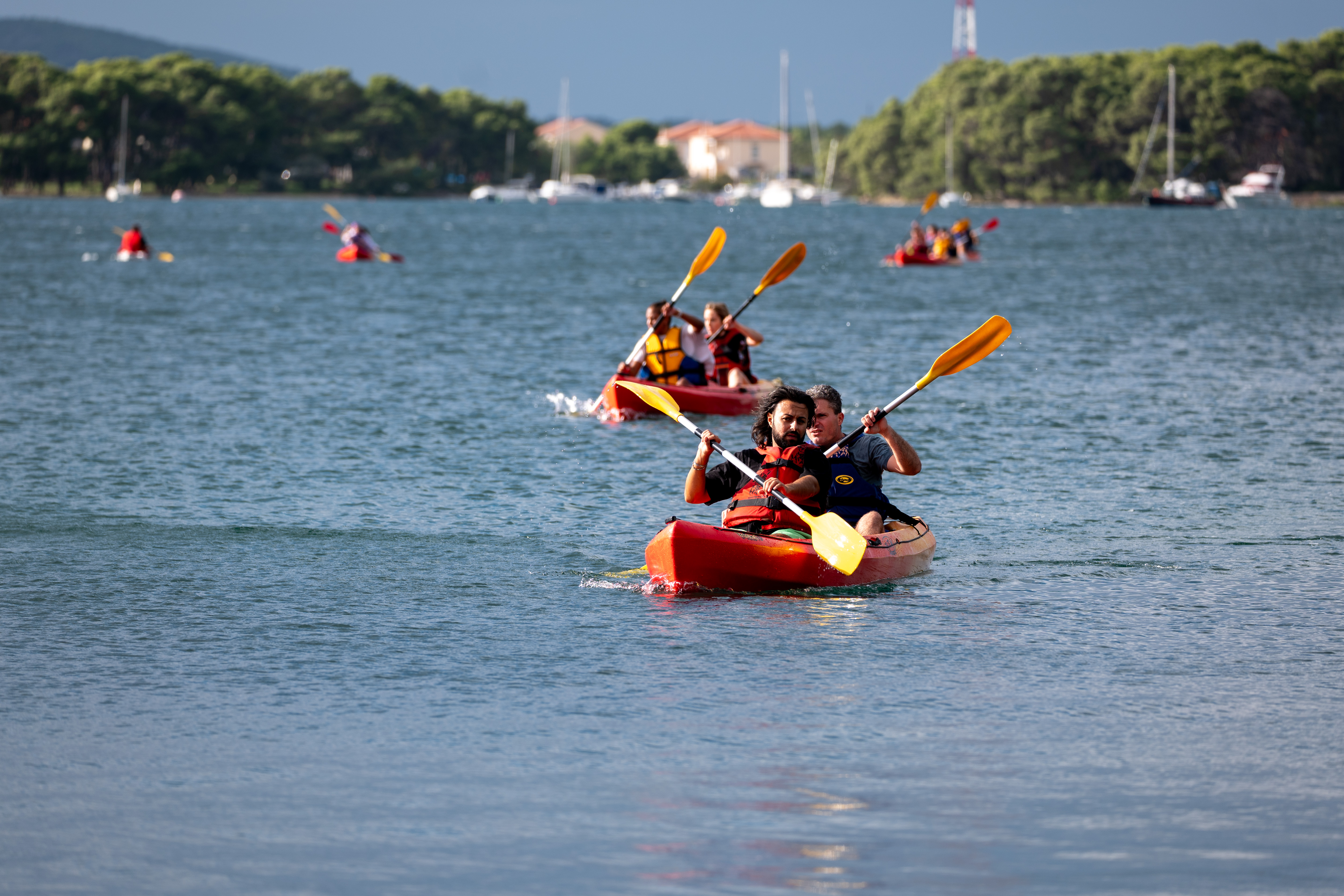
A long lunch. Something outdoors. A cultural activity. A walk with no destination. Or simply some unstructured time where people can do their own thing.
Not every hour of a retreat needs to be productive.
Sometimes the most useful thing you can put on the agenda is nothing.
The final day is about bringing everything together.
You’re no longer trying to get people into the room or build momentum. You’re helping them process what happened, remember the useful bits and leave with a sense that the retreat actually went somewhere.
Look back. Capture what changed. Agree what happens next.
Then let people go home.
The best retreat agenda doesn't finish with everyone exhausted. It finishes with everyone knowing what they’re taking home with them.
We humans are relentlessly optimistic creatures.
We plan our lives and our days as though we'll operate at full throttle from breakfast until bedtime.
To do lists include the following:
The truth is, there are some days where you just won’t do all that. Because here’s the thing. We humans get tired. We also like to let our hair down too.
It’s your fellow humans that are going to be living your retreat agenda. So don’t force them through the optimism that you give to your to do list!
Our Corporate Retreat Agenda Template uses a simple rough split: 50% structured work, meaning plenary sessions, breakouts, workshops and planning, front-loaded where energy is highest. 30% activities and meals: excursions, team challenges, shared meals and local culture, where the bonding happens. And 20% genuine downtime, unstructured, not "optional yoga," actually free.
The interesting number isn't the 50%. It's the 20%, the bit that gets deleted first when the agenda gets crowded.
Most people think the ratio to optimise is work vs. fun. It's not. It's structured vs. unstructured time.
Genuine downtime means exactly that: not "free time" that fills up the moment someone suggests an optional activity, but time that's protected, blocked and defended. As the template puts it: "Not 'optional yoga', actually free."
That white space is where the retreat becomes human. It's where the real conversations happen, where someone finally says the thing they've been thinking since day one. It's where people sit by the pool, call home, swim, or do nothing for an hour. And sometimes it's where something happens you couldn't have planned.
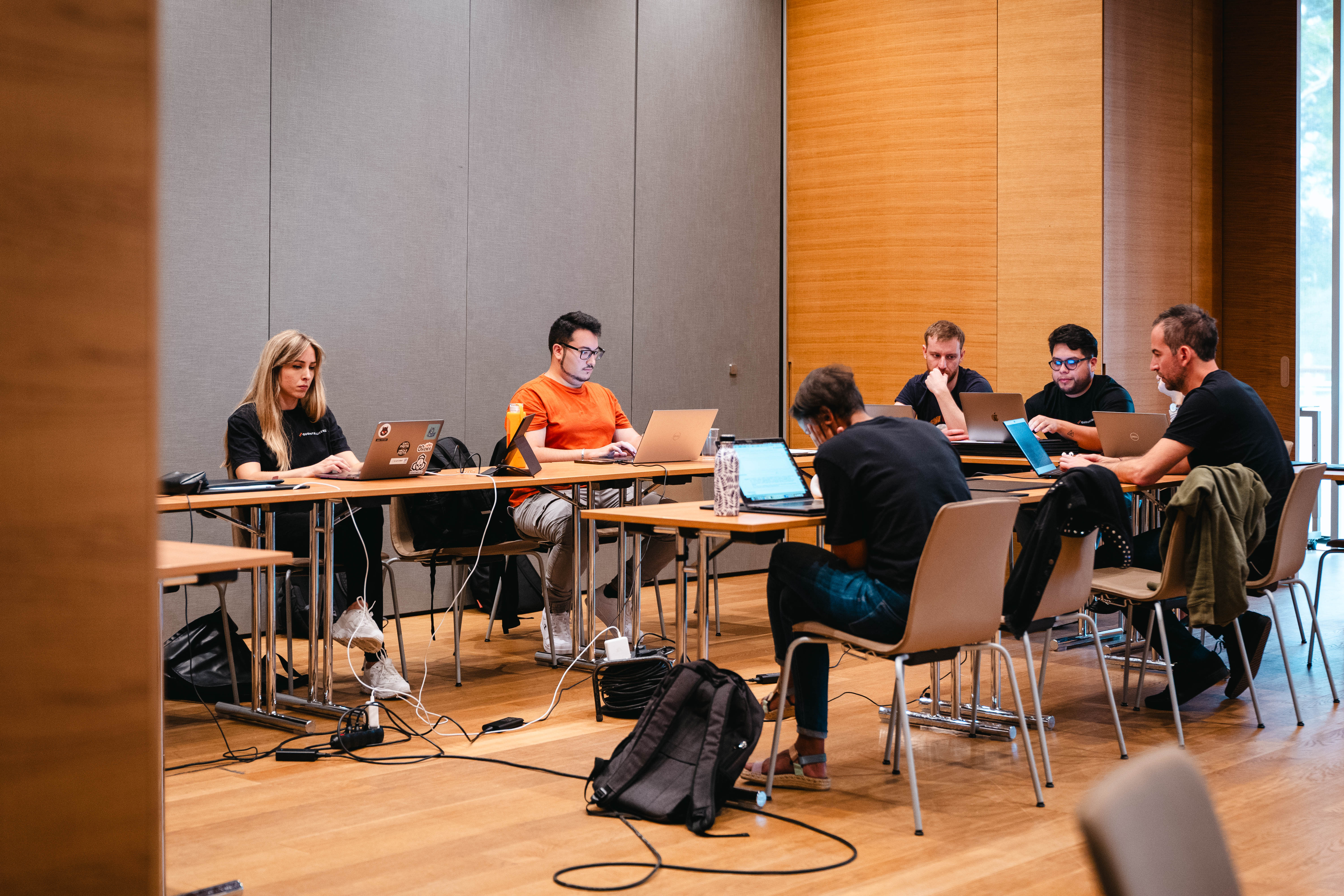
We saw this clearly with QuoIntelligence corporate retreat in Salamanca. After three years working together, we already knew what worked for this team: work hard in the morning, then let the afternoon breathe. Workshops and focused sessions ran in the morning; afternoons were for padel, cafés, wandering the city and guided experiences. Evenings were unrushed dinners and time together, rather than another layer of organised entertainment.
It sounds simple, and maybe that's the point. Their feedback gave the work-versus-free-time balance a 91% score. There was another signal too: one evening, Antonio, their COO, took over the social plan himself and led the group on a pub crawl through some of his old local spots.
That's what protected time can create: not necessarily a bigger activity, just enough space for the group to make the retreat their own.
High trust, no over-programming, no burnout.
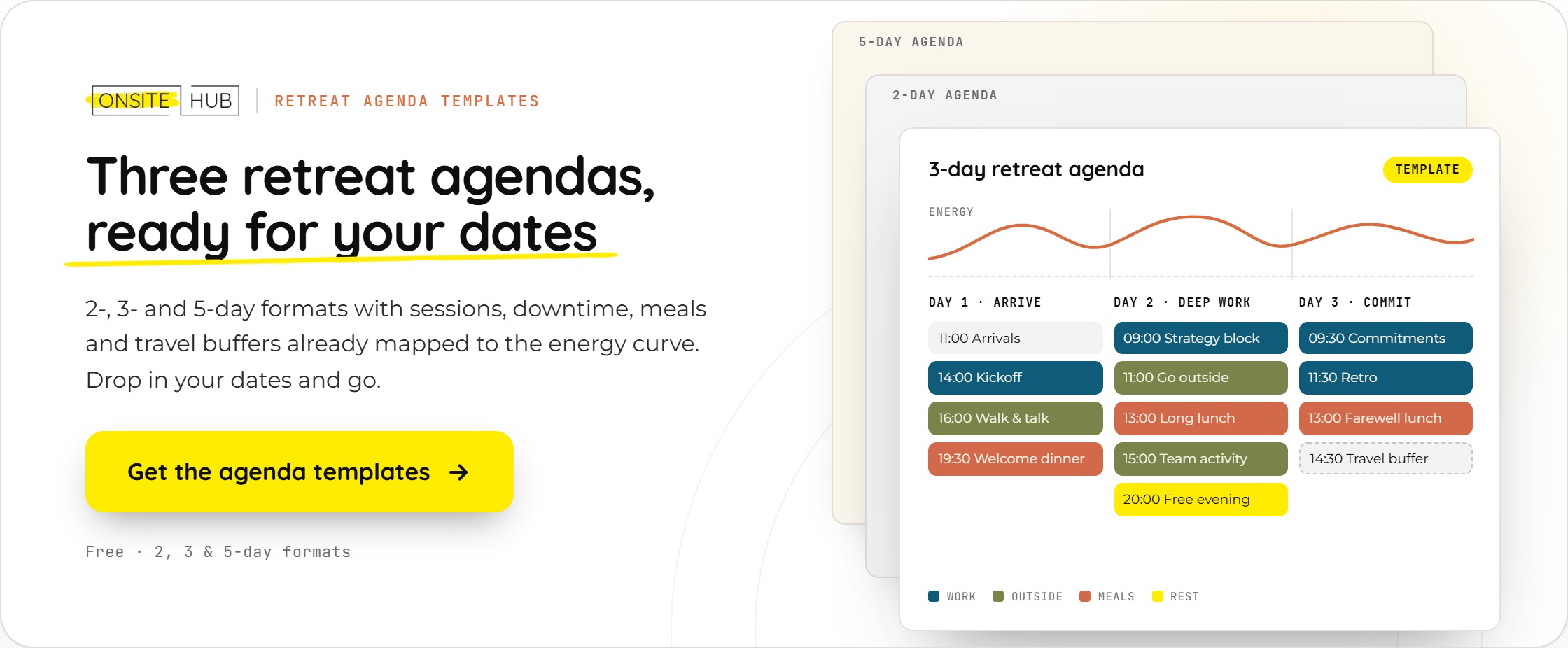
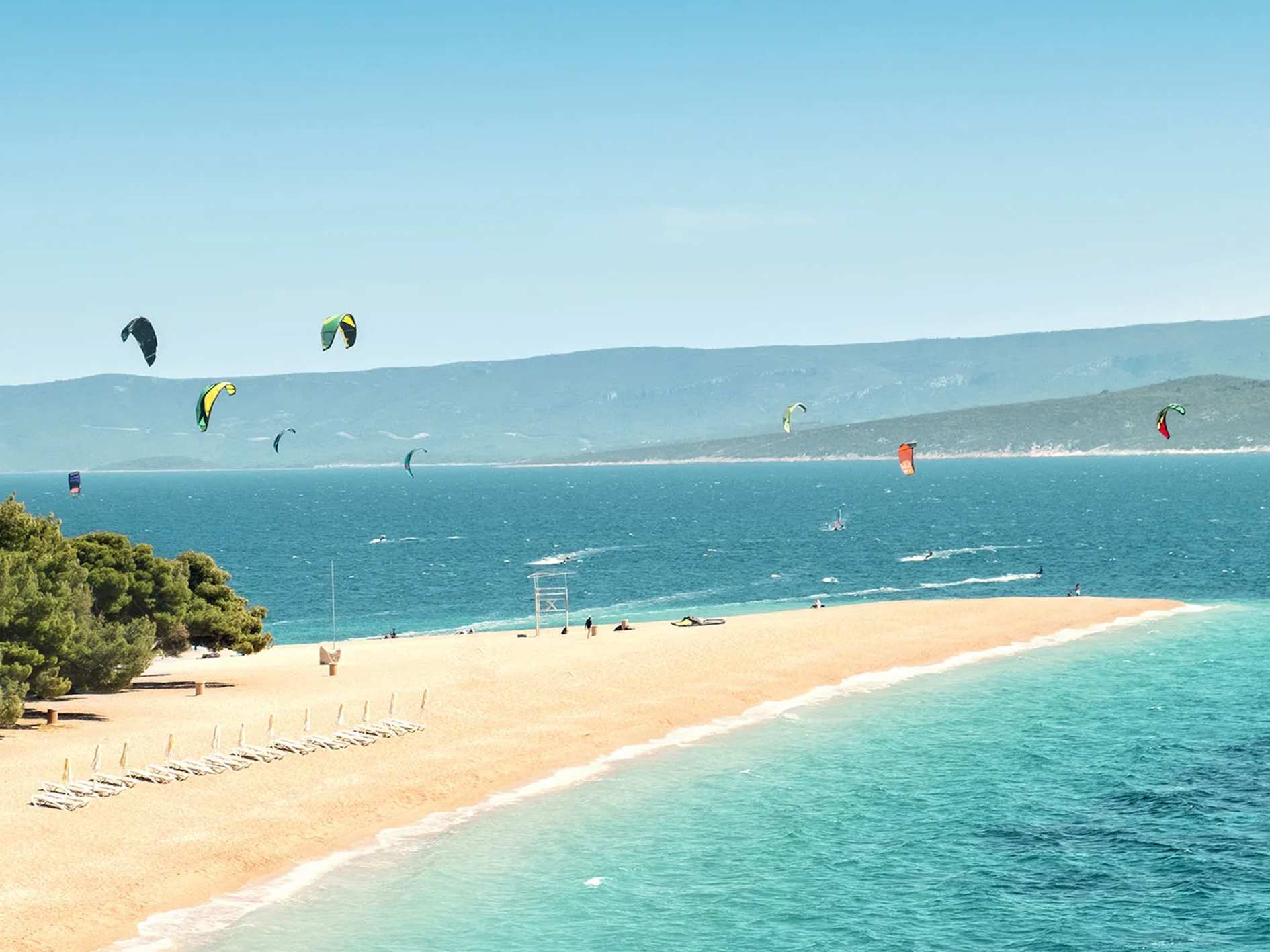
Let's make it concrete. Here's a real structure from our Corporate Retreat Agenda Template: a 3-day, 40-person all-hands on the Croatian coast.
The agenda is based on retreats we've run around Šibenik and Brač, including ParkBee's first international corporate retreat.
And Day 2 is where the thinking becomes particularly clear.
08:00–09:30 — Breakfast
Rolling breakfast.
No 9am meeting after people have travelled hard the day before.
09:30–10:00 — Day 2 Framing
A quick stand-up.
What today is for.
What you'll have by the end of it.
10:00–12:30 — Company state of play
The main structured work starts here.
Leadership sets out where the business is, the big bets and what the team needs from each other.
Q&A is built in.
12:30–14:00 — Lunch
A proper break.
Not another working session disguised as lunch.
14:00–16:30 — Cross-team challenge
Mixed teams work on a two-hour challenge, roleplaying as a competitor trying to displace the company.
There is a clear output.
It's collaborative, but it's still structured.
16:30–17:30 — Free time
And here is the important bit.
The template literally calls this time “Sacred.”
Beach.
Pool.
Sleep.
Call home.
Nothing else.
17:30–19:30 — Group activity
A local cultural experience.
A boat trip.
Olive oil tasting.
Coastal walk.
The exact choice can change, but the agenda has left room for the experience to exist as an experience, rather than another box to tick.
20:00–22:30 — Dinner
Social.
Mixed seating.
No need to turn dinner into another workshop.
22:30–late — Bar / fire pit
Optional.
People can keep talking if they want to.
Or they can go to bed.
Notice the shape.
Work is concentrated. Meals have room around them. There is genuine downtime. The social part isn't treated as a reward for surviving the work.
And nobody has tried to squeeze another activity into the one-hour gap just because it was there.
That's the 50/30/20 principle in practice. Not as a mathematical law. As a way of stopping the agenda from eating itself. The other sample agendas in the template show how this changes depending on the retreat.
The 2-day Lisbon agenda is tighter and more decision-heavy, designed for a 20-person leadership group.
The 5-day Antalya agenda spreads work, team bonding, celebration and recovery across a much larger distributed gathering.
In short. The structure changes. The principle doesn't.
Before you send the agenda around, ask yourself:
“You’re flexible and creative, but also direct. If something won’t work, you say it. That honesty is exactly what we need.”
That's Antonio from QuoIntelligence, after three years of working with us.
If you follow the structure above, you might find yourself thinking: None of this is all that complicated. Which it isn't. The hardest part is the human part. Saying no.
Saying no to the VP's pet session. Saying no when the CEO says:
“Can we just add one more thing?”
Saying no to the optional activity that isn't really optional because everyone will feel obliged to go. We've done it with the small things, too.
A client once wanted to squeeze another activity into an already-tight window between sessions and departures.
On paper, it worked. In reality, it would have meant rushing through something that should have felt unhurried. So we cut it.
We've also pushed back on bigger structural choices. A team might want a secluded venue for focus, but also easy access to a busy city for activities.
Both are perfectly reasonable requests. Together, they can mean hours in vans instead of hours actually spent together.
Because while saying yes feels helpful in the moment, it's the fast food of retreat design. It fills the plate. It doesn't necessarily nourish anyone.
Every time we say no, we're choosing quality over convenience. Sometimes that means reducing scope. Sometimes it means challenging an idea. Occasionally, it means losing a piece of work altogether. And that's okay. The right clients tend to recognise it quickly.
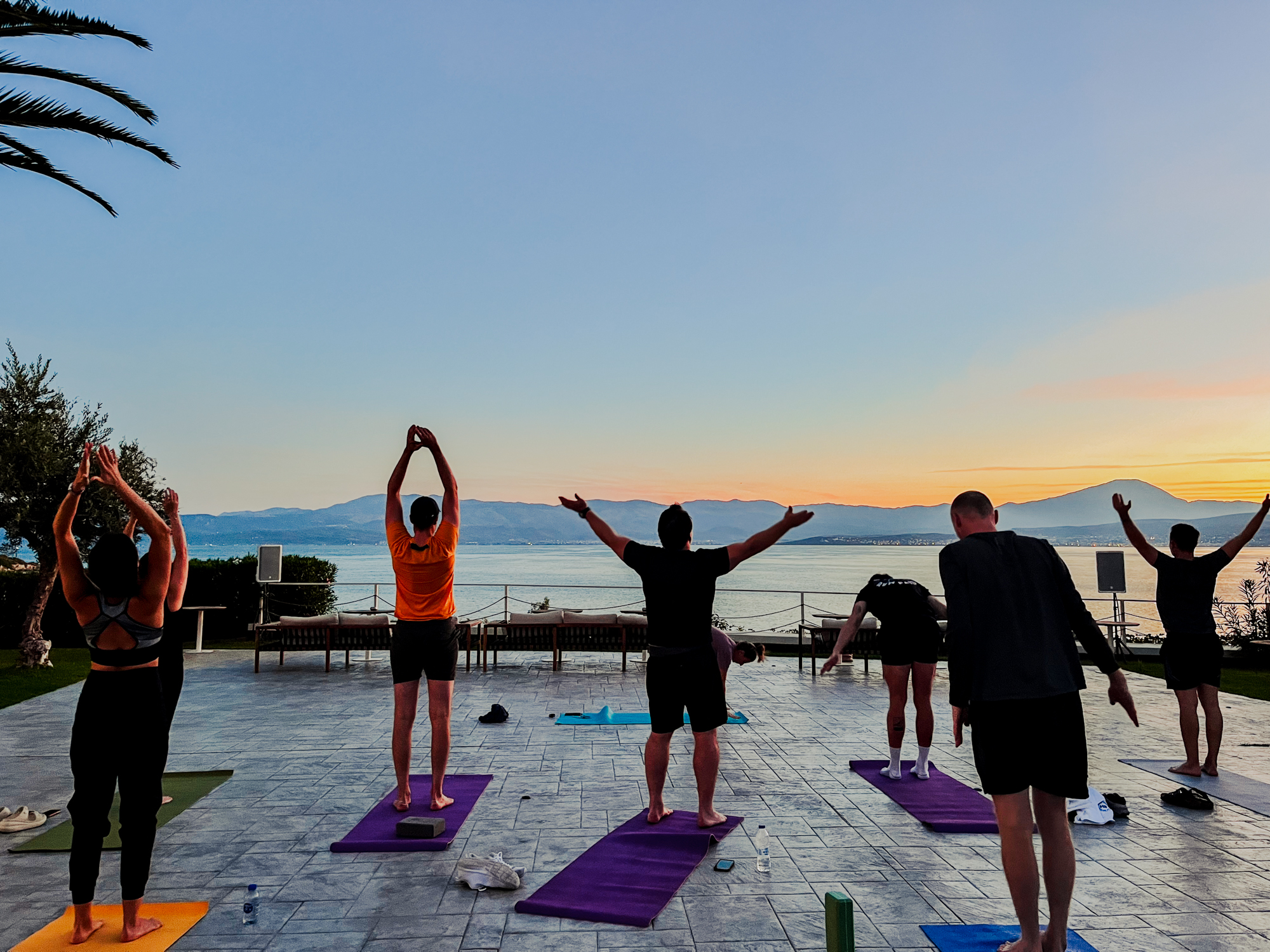
Most retreat agendas fail for a structural reason. They're built like conferences, packed end to end, fighting the energy curve instead of working with it.
The fix isn't another activity. It's fewer activities, better placed, with enough space around them for people to actually experience the retreat.
That's what our Corporate Retreat Agenda Template is designed to help with.
Inside, you'll find:
...and real retreat examples from OnsiteHub's work across Europe.
Use it to build the shape before you start filling the boxes. Protect the white space. Say no to everything that doesn't serve the retreat, and you'll come home with a team that's actually closer, not just more tired.
Download the Corporate Retreat Agenda Template
P.S. The agenda is the plan. The run-of-show runs it. When you're ready to actually run it, pair it with the Run-of-Show Template.

You brief us once. We handle venues, travel, activities and everything in between.